October 26, 2026
Who tests organic crops, and how often

Purl Ambrose
Writes Purl of Wisdom
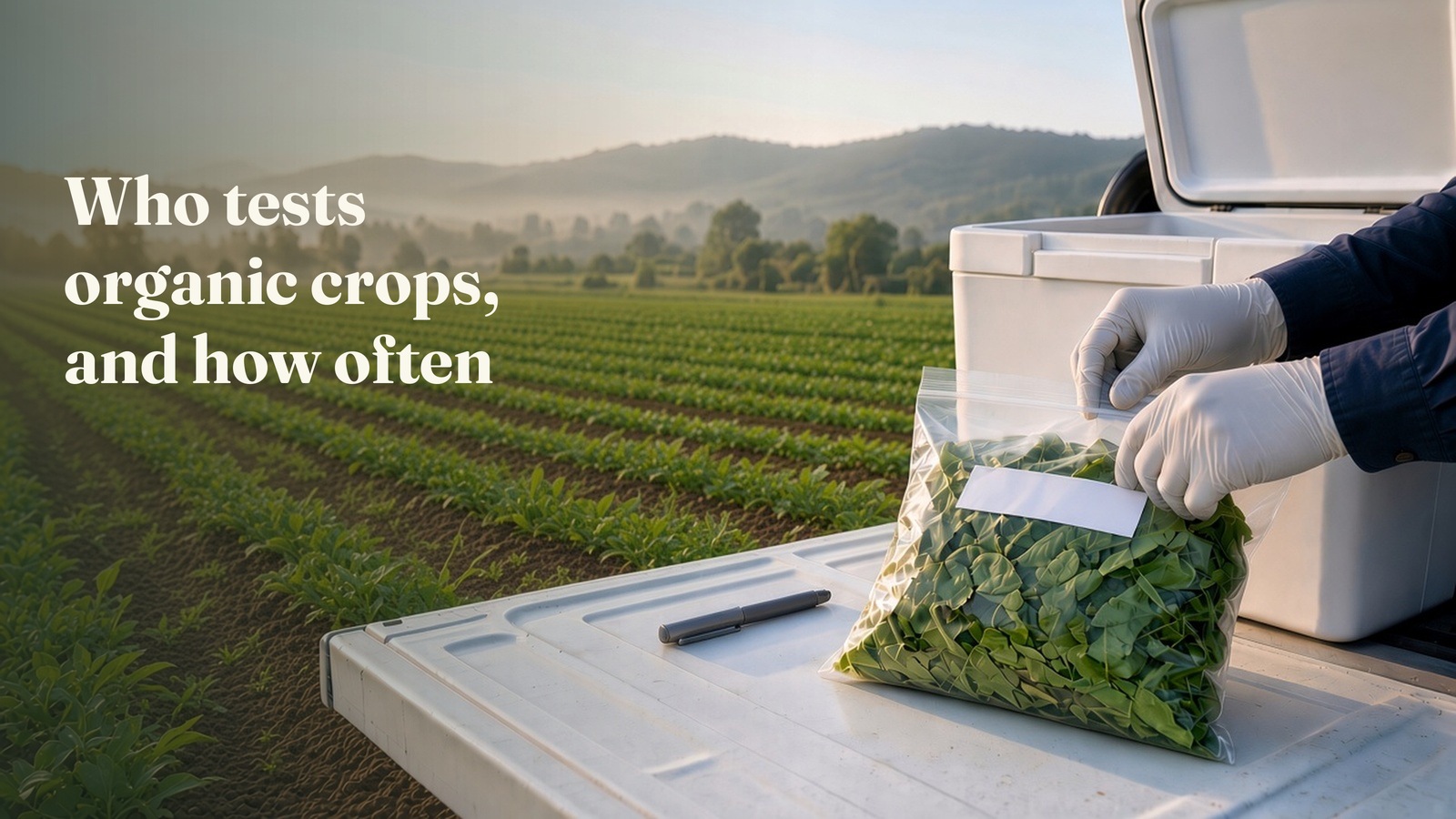
Some inspection days end with a receipt. Not for lunch, but for a sample the inspector took from the farm.
That sample is part of a rule. Every year, each organic certifier has to sample and test from at least 5 percent of the operations it certifies, rounded to the nearest whole number. A certifier with fewer than 30 operations still has to test at least one. On top of that, a certifier, a State organic program, or USDA can ask for a test any time there's reason to believe a product touched a prohibited substance.
The sample can be almost anything: soil, water, seeds, leaves, or the finished product. It has to be collected by an inspector, who leaves a receipt for what was taken. The operation can't charge for the sample. From there, the sample has to stay intact through the whole chain of custody, so every hand it passes through is accounted for. The test itself is run by an accredited lab using validated methods.
So what counts as a problem? If a prohibited substance shows up at more than 5 percent of the EPA tolerance for that residue, the product can't be sold or labeled as organic, and the certifier can look into what caused it. If a result goes over a federal tolerance, the certifier has to report it to the federal agency that set the limit and to the state health agency.
Results are available to the public, unless the test is part of an ongoing compliance investigation.
A heads-up: the National Organic Standards Board, which advises USDA on organic rules, meets October 27–29, and a proposal reviewing this testing rule is on its agenda. The board's vote doesn't change the rule by itself, but the rule could change down the road. If it does, this post will be updated.
Knitters have their own version of this. You can't check every stitch in a blanket, but a careful swatch tells you whether the work matches the pattern.
So an organic label isn't only paperwork. Every year, some of what's behind it goes to a lab.
— Purl
Sources
- 7 CFR 205.670, Inspection and testing (sampling 5%, who collects, chain of custody, accredited lab, public results, reporting) (opens in a new tab)
- 7 CFR 205.671, Exclusion from organic sale (5% of EPA tolerance) (opens in a new tab)
- 7 CFR 205.403(f)(1), receipt for samples, no charge to the inspector (opens in a new tab)
- NOSB Fall 2026 meeting packet (Oct 27–29 agenda, §205.670 proposal) (opens in a new tab)