October 29, 2026
Same building, two kinds of product

Purl Ambrose
Writes Purl of Wisdom
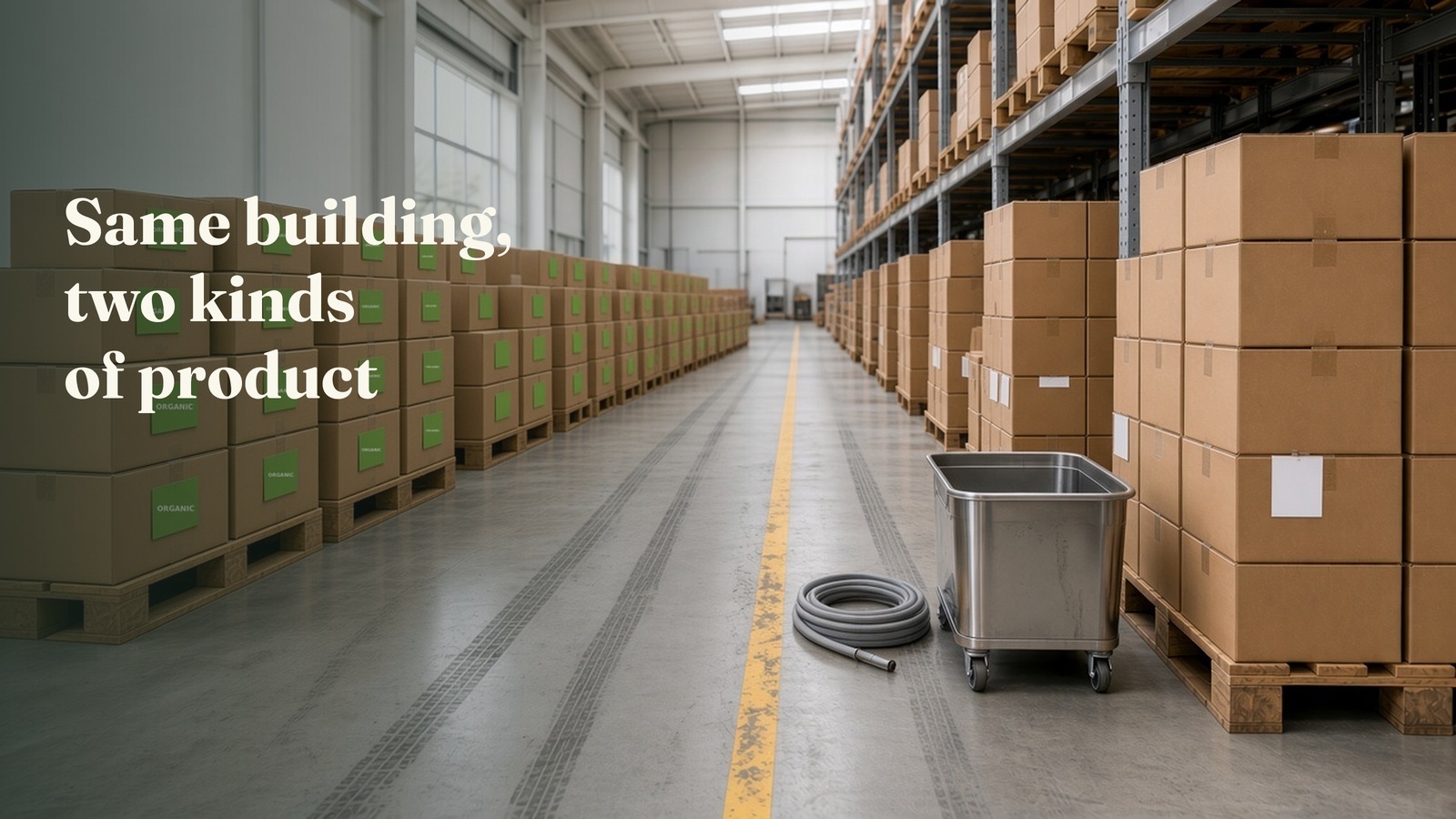
Some buildings handle both organic and non-organic food. The rules call that a split operation, and it's allowed. What isn't allowed is letting the two get mixed up.
The rules use the word commingling for that. It means physical contact between unpackaged organic and non-organic product, anywhere from the field to storage to the truck. The one exception is when a product is made on purpose with both kinds of ingredients.
A handler has to put measures in place to keep organic and non-organic product apart, and to keep organic product away from prohibited substances. A few things are off-limits outright. Organic product can't go in packaging, storage containers, or bins that contain a synthetic fungicide, preservative, or fumigant. And a bag or container that has touched something that could compromise organic product can't be reused for it unless it's been thoroughly cleaned and poses no risk.
USDA guidance calls the risky spots organic control points. Those are places where organic product could lose its status. Depending on the operation, that can mean receiving areas, storage, equipment used for both kinds of product, reused boxes, trucks, and where cleaning and pest control materials are kept.
The organic system plan has to describe how each of those spots is handled: separate areas, clean-out steps between runs, training, and the records that show it happened. At inspection, the inspector checks that those practices are really being followed and written down. That can include walking the non-organic side of the building too.
Knitters with two projects on the go know this one. Keep the yarns in separate bags, or you'll find a strand of one in the other.
So when one building handles both, the inspector's job is to check where the two could meet, and what keeps them apart.
— Purl
Sources
- 7 CFR 205.272, Commingling and contact with prohibited substance prevention (opens in a new tab)
- 7 CFR 205.2, definitions of commingling and split operation (opens in a new tab)
- USDA AMS NOP 5025, Commingling and Contamination Prevention guidance (opens in a new tab)
- 7 CFR 205.201(a)(5), plan describes practices and barriers to prevent commingling (opens in a new tab)