October 27, 2026
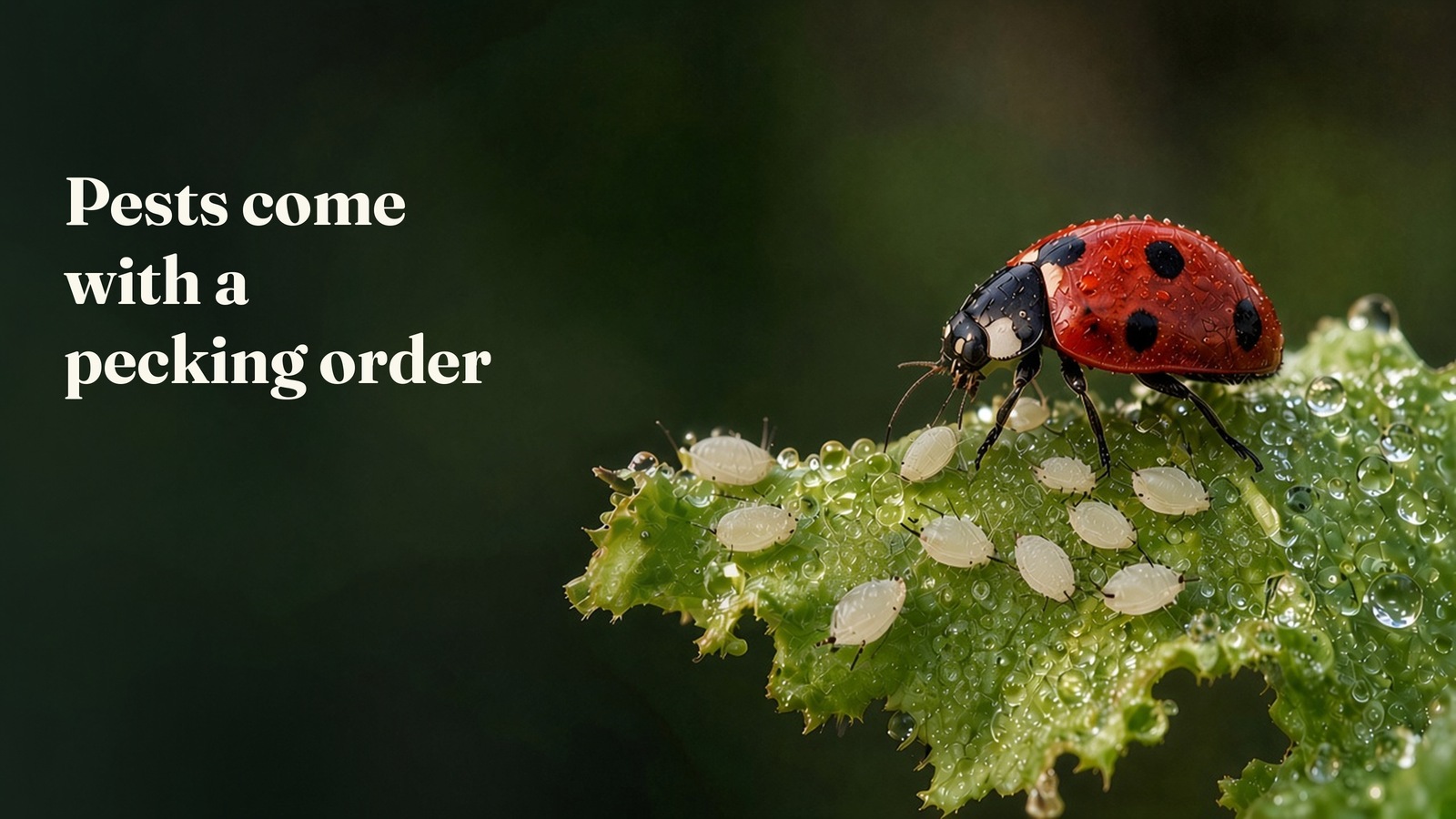
Pests come with a pecking order

Purl Ambrose
Writes Purl of Wisdom
Organic farms deal with bugs, weeds, and plant disease like everyone else. What's different is the order they're supposed to do it in, and that order is written into the rules.
Step one is prevention, and it isn't optional. The rules say an organic grower must use practices that head off problems before they start: crop rotation, managing soil and crop nutrients, and sanitation that clears out weed seeds, disease carriers, and places pests like to live. It also covers choosing crops and varieties that suit the site and hold up against the pests and diseases common there.
Step two is physical and biological control. For pests, that can mean bringing in their predators or parasites, building habitat for those helpers, or using nonsynthetic lures, traps, and repellents. For weeds, it's things like mowing, grazing, hand weeding, cultivation, flame or heat, and mulch. For disease, it's management practices and natural biological, botanical, or mineral inputs.
Only when those steps aren't enough can a grower apply a biological or botanical substance, or a synthetic that's on the National List of materials allowed in organic crop production. Even then, there's a condition: the circumstances for using it have to be written down in the farm's organic system plan.
That's where the inspector comes in. The on-site inspection checks that the plan matches what's really happening. Is the material on the shelf one the plan covers? Does the plan say when it gets used, and do the records line up?
Knitters work the same way. When a row goes wrong, you unravel a little first and reach for the scissors last.
So on an organic farm, the spray bottle is the last step, and the plan has to say so.
— Purl