November 2, 2026
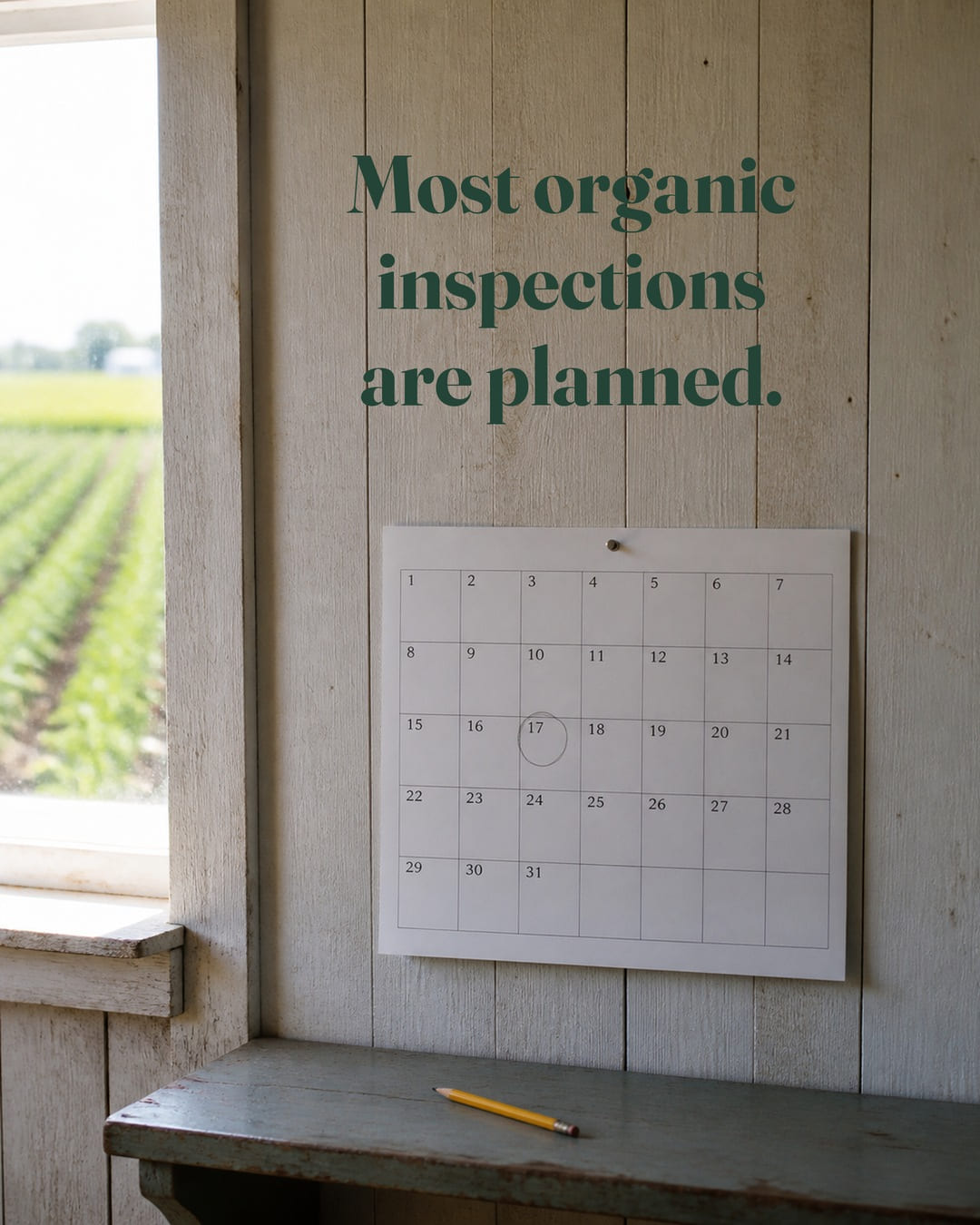
Most organic inspections are planned
certification process

Purl Ambrose
Writes Purl of Wisdom
Most organic inspections are planned. Before a farm or business is certified organic, the certifier sends an inspector for a first on-site visit. After that, there's another one every year for as long as the operation stays certified. Each visit feeds one question: should certification start, or keep going?
Planned doesn't mean whenever is easiest. The rules say when these visits happen. Someone from the operation who knows it well has to be there. And the timing has to land when the land, buildings, and work that show the operation follows the rules can actually be seen: crops in the field, product on the line. You can't check a harvest in an empty barn. For a first inspection, the rules even allow waiting up to six months so there's something real to look at.
Once the inspector is there, the visit checks that the operation's organic plan matches what's really happening. It checks that prohibited substances haven't been and aren't being applied, and samples may be taken. It checks that what came in adds up to what went out, and that organic product can be traced from purchase to sale.
Before leaving, the inspector sits down with that same knowledgeable person for an exit interview: confirm what was seen, ask for anything missing, raise any concerns. If samples were taken, the operation gets a receipt. Later, the certifier sends a copy of the inspection report.
Knitters know you can't check the fit of a sweater that's still a ball of yarn. A planned visit waits until there's a sweater.
But planned isn't the whole picture. The rules also build in a visit nobody scheduled, and the timing rules above don't apply to it. More on that tomorrow.
— Purl