November 5, 2026
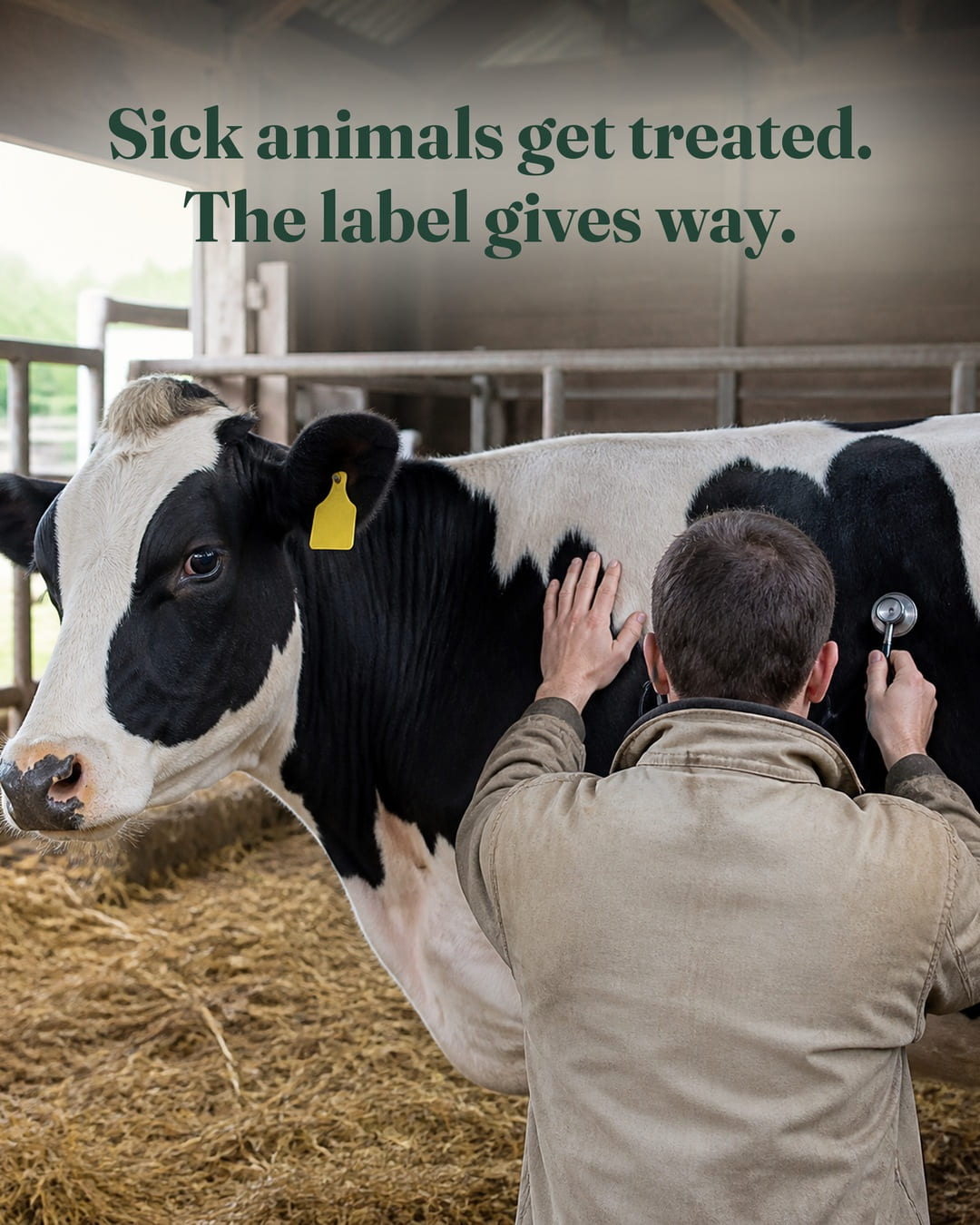
A sick organic animal still gets treated
records · labels

Purl Ambrose
Writes Purl of Wisdom
If an organic cow gets sick and the organic options don't work, the farmer can't let her go without treatment to protect the label. The rules say so in plain words.
Organic livestock care starts with prevention. The rules require producers to keep up preventive health care: animals suited to the site and resistant to common diseases and parasites, a feed ration that meets their nutritional needs, housing, pasture, and sanitation that limit the spread of disease, room to exercise and move freely, and vaccines.
When prevention isn't enough, some medications are allowed. They come from a specific list in the rules, and they can be used to ease pain or suffering, or when prevention and vaccines haven't kept an animal from getting sick.
Then comes the line that matters most here. An organic livestock operation must not withhold medical treatment from a sick animal in an effort to preserve its organic status. When methods acceptable in organic production fail, all appropriate medications must be used to restore the animal to health, even ones organic doesn't allow, like antibiotics.
That choice has a cost, and the rules spell it out. An animal treated with a prohibited substance has to be clearly identified, and neither the animal nor its products can be sold, labeled, or represented as organic. Milk from an animal on an allowed medication with a withdrawal period can't be sold as organic until that period ends.
Every treatment also gets written down. The rules say an operation can't neglect to identify and record the treatment of sick and injured animals in its animal health records. At inspection, the inspector checks that the farm's organic plan and those records match what's really happening with the herd.
So organic status never outranks a sick animal. The animal gets treated, and the label is what gives way.
— Purl
Sources
- 7 CFR 205.238(a)(1)–(4), (6), preventive health care practices (site-suited, disease-resistant stock; feed ration; housing, pasture, sanitation; exercise and freedom of movement; vaccines and other veterinary biologics) (opens in a new tab)
- 7 CFR 205.238(b), allowed medications (under 205.603) to alleviate pain or suffering and when preventive practices and veterinary biologics are inadequate (opens in a new tab)
- 7 CFR 205.238(c)(7), must not withhold medical treatment to preserve organic status; all appropriate medications must be used; treated animal clearly identified; animal and products not sold as organic (opens in a new tab)
- 7 CFR 205.238(c)(1), animals treated with antibiotics or non-allowed substances not sold as organic; milk withdrawal period (opens in a new tab)
- 7 CFR 205.238(c)(9), must not neglect to identify and record treatment in animal health records (opens in a new tab)
- 7 CFR 205.403(d)(2), inspection verifies the plan reflects actual practices (opens in a new tab)